First I want to announce the winner of SEEING CINDERELLA. The winner is:
DEB MARSHALL!
Congrats! E-mail me your address so I can send you your book.
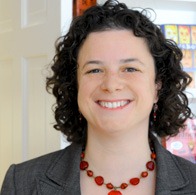
Today I’m excited to interview Leah Bobet about her debut book ABOVE, which was released yesterday, April 1, 2012. Happy Release Day Leah! I really enjoyed the unique world of Safe and Above that Leah created. I found Matthew and the other characters so sympathetic because they were all injured in the light of society in some way.
Here’s a blurb from
Goodreads:
Matthew has always lived
in Safe, a community hidden far beneath the pipes and tunnels of the
city Above. The residents fled to Safe years before to escape the
Whitecoats and their cruel experiments, and now Matthew is responsible
for both the keeping of Safe’s stories and for Ariel—a golden-haired
shapeshifter, and the most beautiful girl he’s ever seen.
But one horrifying night, an old enemy murders Safe’s founder,
Atticus, and the community is taken over by an army of shadows. Only
Matthew, Ariel, and a handful of friends escape Above. Now they not only
have to survive in a sunlit world they barely know, but they must
unravel the mystery of the shadows’ fury and Atticus’s death. It’s up to
Matthew to find a way to remake Safe—not just for himself and his
family, but for Ariel, who’s again faced with the life she fled, and who
needs him more than ever before.
An urban fantasy and a love story, Above is the breathtaking debut of an extraordinary new voice
Hi Leah. Thanks so much for joining us.
1. Tell us a bit about yourself and how you became a writer. I read that you live in Toronto. I love that city though it’s been awhile since we’ve been there. Did you grow up there?
I grew up in a commuter suburb north of the city, one new enough at the time that there were still fields everywhere to toboggan in (most of them are now condos). I was going downtown with friends on the weekends by the time I was 13 or 14, though, since there’s not much of a cultural life in the toboggan fields, and moved into the city by 19. I haven’t left the downtown core since, and don’t really plan to: I love this city in the way you can only love something when you wanted it years before you could ever have it.
As for writing, I was one of those kids who always puttered at it. I stopped in high school for some reason I honestly can’t remember; there’s a story in there about a poem I wrote, and asked my high school boyfriend if he liked, and he said it was kind of melodramatic and that was kind of wounding, but that wasn’t why. I’d really stopped at least two years before that.
What I wanted to be in high school was a musician, actually: I was a music room brat, and did choir, concert band, vocal jazz choir, women’s acapella, musicals, and the straight drama department theatre productions every year, all through high school. I think I spent more time in rehearsal than in class. And I ran around with a pack of other music room brats, some of whom are now
professional musicians. It was only when I found out, rather sharply, that I probably wouldn’t get to be a professional musician that I started writing again, and started publishing short fiction right away, almost, and since I was only 19 that little taste of success went directly to my head in the best kind of way. The rest? Kind of history.
2. How awesome that you starting getting published right away. The world of Above and the world of Safe below are so different. Tell us about how your world building and why you chose underground as the world of Safe.
I feel weirdly safe underground. It’s something about the quiet, and enclosed spaces, and the kind of dark that wraps around you like a blanket and doesn’t press you down. Underground feels like getting away with something, feels like secrets. So things like subway tunnels, and caverns, and so forth show up a lot in my fiction. It’s just this visceral association my brain has.
The worldbuilding that went into Safe was pretty hardcore, though: The whole start of the idea was the 1980s Beauty and the Beast TV show, where you had this underground society, but it was all very sanitary and marble-halled and people could just go up into New York City wearing a cape, like that was going to be a good disguise. Pssh. Really. And I started thinking, well, how would that really work? Which committed me to doing the research of how it would really work.
I picked a real place for where Safe would be — it’s somewhere around the Don Valley, for people who know their Toronto — using stuff like topographical maps, and where the subway lines were, and where people might not be found. And figured out all the living requirements, like electricity, fresh water, air exchange, and worked out ways for the residents to get those things. That meant figuring out what they couldn’t get, too, and building their society around what was plentiful and what just never got down there.
It took a few months to figure out all the bits and pieces. But it was worth it: Where Matthew grew up, and what he understood and what he didn’t, ultimately informed the whole story.
3. I always love how authors draw from their own experiences. Matthew, the main character, has a great voice. How did you develop his voice and do you have any tips for the rest of us on how to do this?
I realized just a few months ago, now that I have some distance from the draft, that I did a few dry runs in terms of Matthew’s voice. There are a few short stories of mine that have almost prototype versions of it — plucky young boy characters who don’t really know how in over their heads they are — and I have 30,000 words of an unfinished novel on my hard drive that had a viewpoint character who was very much a younger, much more cynical version of him. Their speech patterns are eerily similar. Looking back, I was growing that voice in my head for a few years before it ever came out into this novel.
As for tips on writing voice? Granted, this would be a thing that works for me, and may not work for you, but: Try speaking it aloud. Voice is something that’s spoken, that’s heard, and not something that’s naturally written. Voices have rhythms. If you think of it like a bit of music, I find that helps.
4. Ah, there's the musician in you which probably helps you hear the rhythms. That's a great tip to try to read the dialogue out loud. One of the things I loved about ABOVE was that Matthew and all of the other main characters were different physically and/or emotionally and considered damaged by society. How did you decide on these differences? Did the plot dictate them or did the characters come first?
Once I noticed the patterns forming and decided that yes, every character in the book would be marginalized in some way, I did actually sit down and try to assign people things. Some are diagnoses, yes, but others were what I called for the longest time “useless superpowers”. I mean, Matthew has lion’s feet and scales down his back. Jack can conduct electricity with his fingers, and sometimes shoot it, but he blows out any electronics he gets near and can’t touch people or he’ll shock them. Atticus has crab claws for arms, which means he can’t do up his own pants. Those are pretty useless superpowers there.
Some of them are integral to the characters. Some I tacked on as I went, because the characters didn’t figure strongly enough into the story that it would really matter. Most of them, if they weren’t integral to how the plot went, drove the plot later on with their consequences.
5. Unlike most antagonists, Corner is a very sympathetic character. I loved how she/he was both girl and boy. Tell us how you created this character and his/her distinctive voice.
Corner evolved a lot between the first little inkling and the final draft: a lot of the process of figuring out the novel itself, actually, centered around discovering what Corner’s story was — that question was really one of the central questions of writing the first draft, so it was very incremental and organic. When I did figure out Corner’s story, and where she was coming from, I think I burst into tears at the keyboard. And it unlocked the whole book.
I never really wanted Corner to be a villain, in certain ways. Part of the point of Above is that there really are no villains; just complicated people doing complicated things, and hurting each other in the process, sometimes. That’s life.
6. I think you did a good job of showing that. And that's one of the things I liked most about your story. The villain wasn't really a villain. Tell us about how Caitlin Blasdell became your agent and your querying journey to finding your agent.
My agent story is actually really, really textbook: Once I had a draft of the book that was good enough to query on (and it took about three drafts!), I made a short list of agents I wanted to query — either they represented authors I liked, or work I thought was stylistically close to mine, or just cool writers. I sent out queries to them, figured it was the first round of a long summer campaign, and went off to do other things.
Five weeks later, a few agents had the full manuscript, and I had an offer from Caitlin for representation. Once we talked and made sure that how we worked would actually mesh — she’s a very editorially-minded agent, and some people like that, and some don’t, and I very much do — we formalized things and that was that.
So sadly it’s not a very exciting story? But it’s kind of the standard one: Send queries, go through the partials and fulls, and eventually someone comes back saying something nice!
7. I think your story is one we'd all like to have. You found your agent match so quick! Cheryl Klein is your editor. I met her at a SCBWI conference where she gave me an awesome critique. I’d so love to have her as my editor. What’s it like working with her and how did she make your story better?
Cheryl’s really smart, and really perceptive, and knows how to get right to the heart of an issue in a manuscript. She’s amazing to work with, start to finish.
One of the more important ways she really improved Above between submission draft and final product was by, to be blunt, making me justify my crap. I can sometimes have a tendency to put something in just because it’s pretty and I like it, without necessarily caring if it makes 100% sense or justifying the logic. What’s that phrase mean? I don’t care! It sounds right! Go with it! And she made me really look at those things, and be really rigorous, and I think the book’s definitely improved by that.
She also noticed certain things that I never, ever would: I have a few prose-level tics; sentence constructions that I just like a lot. And she flagged them where I wouldn’t have seen, and made me pay attention, and that means the flavour of the prose in Above is more varied, and richer, and more engaging.
These sound like small things, but they’re really not: An editor who can not just edit your work to be better, not different, but can teach you things about your own writing and process? That’s the best thing there is.
8. I can so see Cheryl doing that from the little bit I know about her. She's got a great critical eye for all parts of writing. I know you’re part of The Apocalyspsies. How did you find out about this group and join it? What advice do you have for other debut authors who want to join such a group? When and how should we try to find these groups?
I was put onto the existence of the Apocalypsies by Jodi Meadows, who is part of the same loose used-to-be-a-crit-group that I am. She sold Incarnate around the same time that Above sold, and so here and there we’d kick each other a piece of information (“Hey, did you know there’s a 2012 Debutantes group?”).
As for joining one of the Debs groups, mostly you just have to say your book’s coming out that year and ask nicely. There’s not much to it!
9. That's great advice to connect with other debut authors and share information. Other authors have suggested similar advice. What are you working on now?
An odd little book about a girl and her farm, set in a world so post-apocalyptic they forgot how the apocalypse happened, where all the men just came back from a war against a wicked god; and what happens when they take on a mysterious hired hand for the winter, and the consequences of that war, and losing things, and rebuilding them.
Thanks Leah for letting us share your debut with you and for all your advice. Good luck with your book. You can find Leah at her
website and on Twitter
@leahbobet .
Leah's publisher generously offered an ARC of ABOVE for a giveaway. All you need to do is be a follower (just click the follow button if you’re not
a follower) and leave a comment by midnight
on April 14th. I’ll announce the winner on April 16th. If your e-mail is
not on Blogger, please list it in your comment. International entries are
welcome.
If you mention this contest on your blog, Twitter, or
Facebook, please let me know in the comments and I’ll give you an extra entry.
Here's what's coming up next. Next Monday
I'm interviewing Jennifer Nielson and giving away a copy of THE FALSE
PRINCE. I LOVED this book so much that I immediately e-mailed Jennifer
after I finished it to see if she'd be willing to be interviewed. It
totally reminds me of Megan Whalen Turner's THE QUEEN'S THIEF series,
which I also so loved.
The following Monday I'm interviewing Ruth McNally Barshaw, an author and illustrator, and giving away two books in her Ellie McDoodle series. It's a great series and her illustrations just add so much to the stories. Her fourth book in this series is just coming out and as an experienced author, I'm sure she'll have lots of great advice for us.
Hope to see you on Monday!